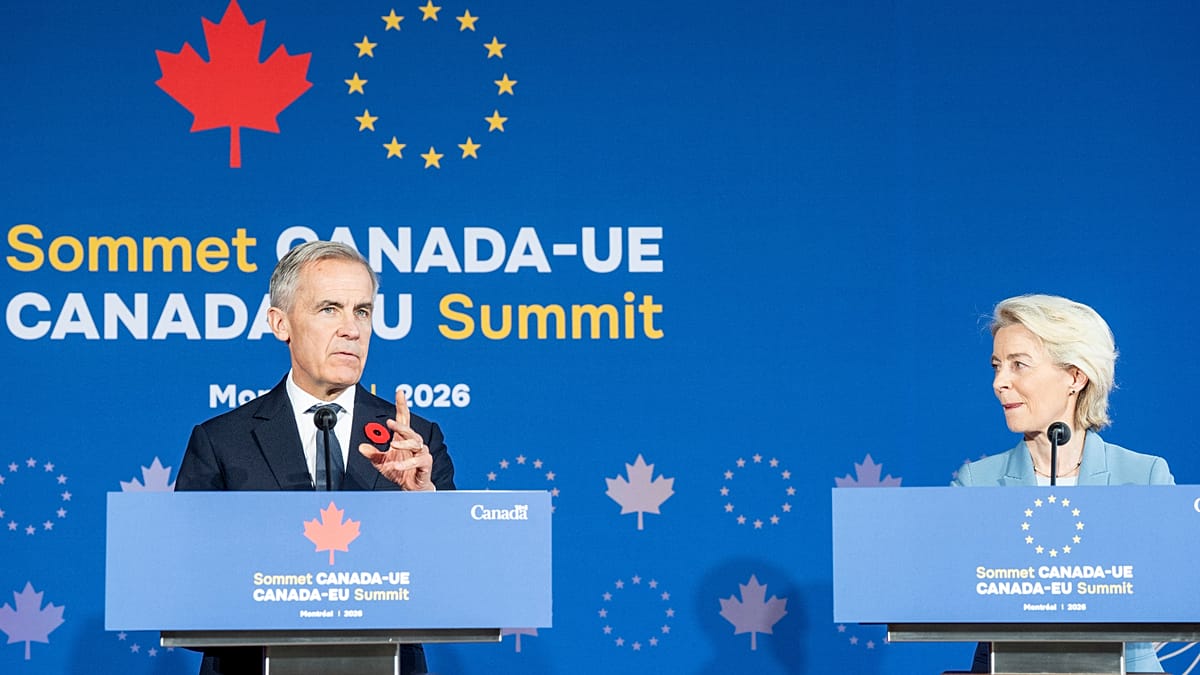
As Canada and the European Union embark on a renewed path of cooperation following a high-profile summit in Montreal, a significant friction point threatens to complicate the partnership: the European Union's carbon border tax. While Ottawa is eager to diversify its trade relationships and forge a deeper economic alliance with Brussels, internal government documents reveal that Canada is actively seeking an exemption from the bloc's incoming carbon tariffs.
The Carbon Border Adjustment Mechanism, which went into effect to protect European producers from competitors operating under weaker climate rules, imposes a carbon cost on specific imports. For Canada, however, the policy poses serious competitiveness challenges. Critical export sectors—including aluminium, steel, critical minerals, and hydrogen—face potential market access risks and complex administrative requirements.
Despite Canada's own history with industrial carbon pricing, the country does not currently qualify for a full exemption under European rules. Full exemptions are typically tied to participation in or a connection with the European Union Emissions Trading System, a standard Ottawa does not meet. Furthermore, the European carbon price remains significantly higher than Canada's domestic trajectory, creating a persistent regulatory gap.
Canadian Climate and Environment Minister Julia Dabrusin has defended industrial carbon pricing as a vital tool for cutting emissions while maintaining business competitiveness in a shifting global economy. When questioned about explicit backing for the European border tax, however, Dabrusin stopped short of an endorsement, emphasizing that discussions remain ongoing.
Behind the scenes, the push for an accommodation is well underway. Government trade and foreign affairs documents indicate that Ottawa is seeking a practical agreement to minimize administrative burdens for Canadian exporters. This tension coincides with broader efforts by Canadian leadership to secure alternative major markets amid shifting trade dynamics with the United States.
At the same time, the debate over carbon pricing and trade integration mirrors intense public and political discussions surrounding economic policy and environmental accountability. Some observers argue that market-based pricing mechanisms remain an indispensable tool for steering industrial behavior, noting that "Carbon taxes work and only the uneducated and willfully ignorant don’t see it. It’s complex, yes, but it works and doesn’t harm people the way many believe." Others contend that applying such policies in an open global market risks penalizing domestic core industries and shifting capital abroad unless trading partners align their frameworks seamlessly.
As the two transatlantic partners work toward defining the scope of their future relationship ahead of upcoming international summits, balancing rigorous environmental standards with equitable trade access remains a central diplomatic challenge. Whether Brussels and Ottawa can negotiate a practical compromise on border carbon adjustments will likely test the resilience of their newly minted alliance.

